
Short answer: Comparison content helps customers choose between options, such as repairing versus replacing, one material versus another or one type of service versus another. To make it useful and trustworthy, explain the options fairly, describe the tradeoffs in plain language, say when each option makes sense, avoid invented numbers and be honest about what you offer. Clear, balanced comparisons are the kind of content people and answer tools tend to rely on when someone asks which option is better.
Many customer questions are really comparisons. Should we repair our old furnace or replace it? Is metal roofing worth it compared with asphalt shingles? Does our business need a full website redesign or just a refresh? People ask these questions in search, and increasingly they ask answer tools, which often respond by summarizing the pros and cons from sources they trust.
A business that publishes fair, specific comparison content helps customers decide and positions itself as a knowledgeable, honest resource. This guide explains how to write it well.
Why comparison content works
It matches real decisions
Customers rarely start by searching for a business. They start by trying to understand their options. Comparison content meets them at that point.
It builds trust
When you explain options fairly, including ones that might cost you less money, customers notice. Honesty is persuasive.
It suits chat answers
answer tools are often asked to compare options. Clear, structured comparisons with direct statements about when each option fits are easy for them to understand and summarize.
Types of comparison content for service businesses
- Repair versus replace: for furnaces, water heaters, roofs, appliances and more.
- Material comparisons: such as flooring types, siding options or countertop materials.
- Service level comparisons: such as basic maintenance versus a full service plan.
- Approach comparisons: such as doing it yourself versus hiring a professional.
- Timing comparisons: such as acting now versus waiting, explained without false urgency.
How to write fair comparisons
Define the options clearly
Explain what each option actually involves. Do not assume the reader knows the difference.
Describe the tradeoffs honestly
Cover factors such as upfront cost, ongoing maintenance, lifespan, appearance, disruption and suitability for different situations. Describe them in relative terms rather than inventing precise figures. For example, explain that one option usually costs more upfront but needs less maintenance, if that reflects your experience and reliable information.
Say when each option makes sense
The most useful part of a comparison is guidance: choose this when, choose that when. Specific situations help readers see themselves.
Admit what you do not offer
If an option is outside what your business provides, say so and explain it fairly anyway. Readers trust businesses that do not twist every answer toward their own services.
Avoid made up numbers
Do not invent lifespans, savings or statistics. If you cite figures, use reliable sources or explain that they vary. When in doubt, describe factors rather than numbers.
Structuring comparison content
A clear structure helps readers and answer tools alike.
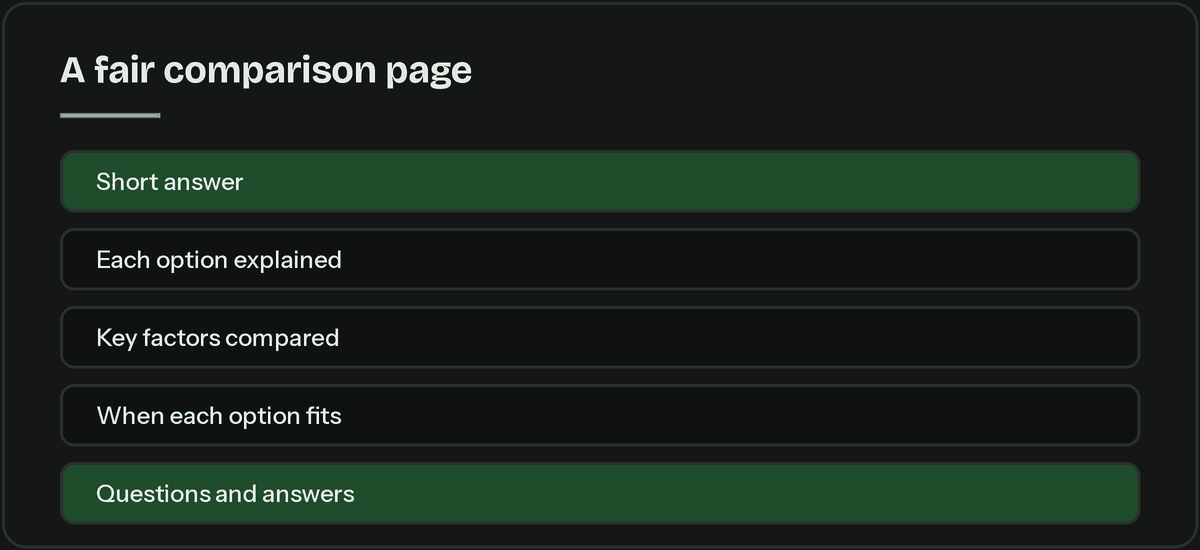
- A short answer at the top summarizing the main difference and when each option fits.
- A section explaining each option.
- A comparison of key factors, as a list or simple table.
- Situations where each option makes sense.
- Common mistakes or misconceptions.
- Frequently asked questions.
- A next step, such as an inspection or estimate.
Use headings that describe each section clearly, such as when repair makes sense.
Comparing your business with competitors
Be careful with content that compares your business directly with named competitors. It is easy to become unfair or inaccurate, and it can create legal and reputational risk. Generally, it is better to compare options and approaches, and to explain what customers should look for in any provider. Our guide on how to choose an SEO agency is an example of that approach in our own field.
Keeping comparisons current
Materials, technology and regulations change. Review comparison content regularly, and revise it when your experience or reliable information changes.
Linking comparisons to your services
Every comparison should link naturally to the related service page and offer a clear next step. Someone who has just read a fair comparison is often ready to talk to a professional about their specific situation.
A short planning exercise
List the decisions your customers struggle with most. For each one, write down what they usually ask, what you tell them in person and the situations where your advice changes. That list becomes the outline for a comparison page. Starting from real conversations keeps the content specific, honest and grounded in your actual experience rather than generic advice.
If you want help planning comparison content that supports ChatGPT and Google answers and your services, our search answer optimization services include content planning built around real customer questions.
Frequently asked questions
Will fair comparisons cost us sales?
Fair comparisons build trust, which often leads to more customers, even if some readers choose a different option. Customers remember who gave them honest advice.
Should we include prices in comparisons?
Include price information only if it is accurate. Explaining relative costs and the factors that affect price is often more useful than specific figures.
How long should a comparison page be?
Long enough to explain both options, the tradeoffs and when each makes sense. Clarity matters more than length.
Next step
Want ideas for comparison content your customers are already searching for? Request a free audit and we will suggest topics based on your services and market.
Work with a local team: Spokane SEO, Spokane Valley SEO and a free SEO audit from an SEO company in Spokane.