Short answer: NAP stands for name, address and phone number. NAP consistency means those details appear exactly the same way on your website, your Google Business Profile and every directory or listing site. Consistent details help Google, Apple Maps, Bing and answer tools trust that all those listings describe the same business, and they keep customers from calling an old number or driving to an old address.
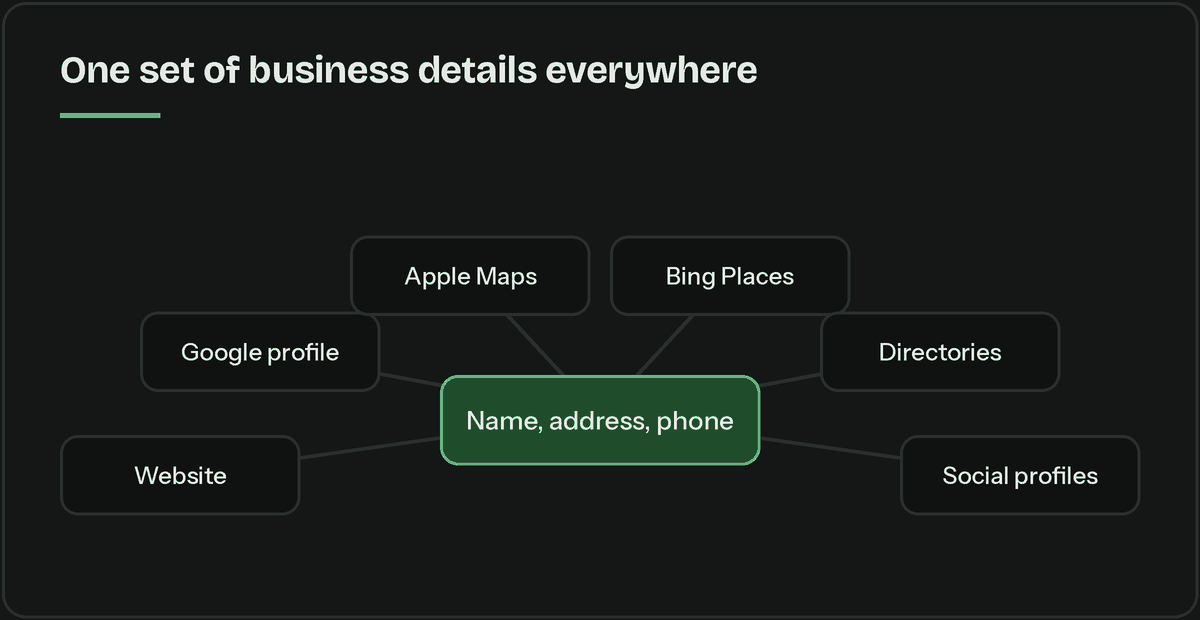
Your business details live in more places than you probably realize. Beyond your website and Google profile, they appear on directories, map apps, social profiles, review sites, industry associations and data providers that feed information to other services. Over the years, those details drift. A suite number gets dropped here, an old phone number lingers there, a former business name sits on a listing nobody remembers creating.
Each mismatch is small, but together they create doubt. This guide explains why consistency matters, how to find problems and how to fix them without paying for anything.
Why consistency matters
For customers
The most direct cost of inconsistent details is a lost customer. Someone finds an old listing, calls a number that no longer works and moves on to a competitor. Or they drive to an address you left years ago. These are real leads lost to outdated data.
For search engines
Google and other search engines gather information about businesses from many sources. When the same name, address and phone number appear consistently, it reinforces confidence that the information is accurate. Conflicting details can make it harder for search engines to connect your listings to your business. Our guide to local citation building explains how listings support local rankings.
For answer tools
answer assistants that answer questions about local businesses often draw on many sources at once. If those sources disagree about your phone number or address, an answer tool may repeat the wrong one. Consistent details give answer tools a clear, single version of the facts.
Decide on your official format
Before fixing anything, write down the exact version of your details you will use everywhere.
- Name: your real business name as it appears on signage and legal documents, without added keywords or city names.
- Address: one format for the street, suite and abbreviations. Decide, for example, whether you write Suite or Ste, and use it every time.
- Phone: one main local number in one format. Use the same number everywhere rather than a different tracking number on each listing.
- Website: the exact homepage address you want people to use.
Small formatting differences, such as Street versus St, are generally understood by search engines. The bigger concern is genuinely different information, such as old addresses, old numbers or different business names. Still, choosing one format makes audits much easier.
How to find inconsistencies
Start with the big platforms
Check your details on the listings that matter most first.
- Your own website, including the footer, contact page and any schema markup.
- Google Business Profile.
- Apple Business Connect, which feeds Apple Maps.
- Bing Places for Business.
- Facebook and other social profiles.
- Major directories relevant to your industry.
Search for old details
Search Google for your old phone numbers, old addresses and any previous business names, in quotation marks. The results often reveal forgotten listings.
Check data aggregators and directories
Many smaller directories pull data from larger providers. If one source is wrong, the error can spread. Fixing the source helps the rest catch up over time.
How to fix problems for free
- Claim listings you do not control yet, using the free verification process each platform offers.
- Edit the details to match your official format.
- For listings you cannot claim, use the suggest an edit or report incorrect information option.
- Remove or merge duplicate listings using each platform’s process.
- Keep a simple spreadsheet of every listing, its login and the date you checked it.
Avoid paying for services that promise to fix everything instantly unless you understand exactly what they do. Many fixes are free if you are willing to spend some time on them.
Special cases
You moved
When you move, change your details on your website and Google profile first, then work through the other major platforms, then the smaller directories. Expect old data to linger for a while.
You changed your phone number
Keep the old number forwarding to the new one for as long as you can while listings catch up.
You work from home
If you are a service area business that does not serve customers at your address, hide the address on your Google profile and handle it consistently on other platforms. The phone number and business name still need to match everywhere.
Keeping it consistent
Consistency is not a one time project. Review your main listings a couple of times a year and whenever your details change. If you prefer not to manage it yourself, our local SEO services include listing audits and cleanup.
Frequently asked questions
Do small formatting differences hurt local rankings?
Minor differences like abbreviations are usually understood. The real problems are wrong or outdated information, such as old phone numbers or addresses.
Should we use call tracking numbers on directory listings?
Using different numbers on different listings can create inconsistency. If you use call tracking, keep your main number as the primary number where the platform allows.
How long do corrections take to show up?
Major platforms often reflect edits within days. Smaller directories and sites that copy data from others can take longer to catch up.
Next step
Want to know where your business details are inconsistent online? Request a free audit and we will check your key listings and show you what to fix first.
Work with a local team: Spokane SEO, Spokane Valley SEO and a free SEO audit from an SEO company in Spokane.